
Somebody’s grandfather dies, leaves behind a dusty toolbox and forty grand, and suddenly the whole family is arguing about the legacy meaning of a word they’ve used a hundred times without ever really looking at it. Funny how that works, since depending on who’s talking, it means five or six wildly different things. A will. A stubborn office server nobody wants to touch. A friend is asking you point blank what legacy means when they’re talking about their dad.
Here’s what you’re getting in this one. What does it mean to be a legacy? How does the word bend across boardrooms, campaign trails, and kitchen tables? How does it translate into Farsi and Arabic, and how does it stack up against words like “inheritance” and “heritage”? Stick around and you’ll never have to guess which meaning applies again.
What Does Legacy Mean
Strip away everything fancy, and a legacy is just this: something handed from one person, one generation, one era, to whatever comes next. Cash counts. Property counts. But so does a reputation. So does the mess someone leaves behind, or the reason a whole town still trusts a family name forty years after the founder’s gone.
Merriam Webster’s official line is that a legacy is something willed to someone by a person who has died, a bequest, plain and simple. But there’s a second layer, something transmitted from an ancestor or from the past more broadly. Then there’s a third meaning entirely, one that’s crept into everyday use: outdated computer systems and university applicants riding on a parent’s old acceptance letter. Three definitions, one word, zero warning labels.
So when someone types “What does legacy mean?” into a search bar at midnight, the honest answer is: depends what sentence you found it in.
Legacy as Money or Property
Oldest sense on the list. Most literal too. A gift, specifically tied to a will.
She got a legacy of eighty grand from her grandmother’s estate, no strings attached. A stack of university scholarships out there are still funded by legacies left decades ago by grads whose names nobody remembers.
Lawyers live in this meaning. Estate planners too. Probate court paperwork, almost exclusively.
Legacy as Reputation and Impact
Second meaning, and it’s got nothing to do with lawyers. This one’s emotional. It’s about how a person gets remembered once the funeral’s over and the casseroles stop showing up.
A retiring plant manager might leave behind a legacy of fairness, the kind coworkers still talk about at reunions. A high school teacher’s real legacy often surfaces years later, buried in the achievements of a kid who barely spoke in class.
This is probably what’s driving searches like leave a legacy meaning. Nobody typing that is thinking about wills. They’re asking something heavier: did any of it matter?
What Is the Meaning of “Legacy” in English
In everyday English, Legacy works two jobs. Noun first: the thing left behind. Adjective second, something old that just won’t leave the building.
According to the Oxford English Dictionary, the word “crawled” entered English during the Middle English period, somewhere around 1384, tied originally to the office of a legate, basically a fancy medieval word for ambassador. Two centuries later, give or take, it shifted from describing a job title to describing what that person left behind after death. Wild jump, honestly.
By the 1980s, English speakers had dragged legacy into economics, commerce, and computing. That’s where phrases like “legacy costs” and “legacy system” come from. Nothing to do with wills. Everything to do with old machines refusing to die.
The Adjective Form
As an adjective, it’s rarely a compliment. More of a groan.
A legacy system is old software or hardware still limping along despite better options sitting right there. A legacy product is something no longer sold, but the company still has to support it because a handful of customers refuse to switch.
The Noun Form in Modern Use
As a noun, modern English has stretched “legacy” into political speeches, business strategy decks, and personal journals, way past its original legal home. Which is exactly why legacy meaning in English gets searched constantly. People aren’t confused about a dictionary entry. They’re confused about which of six live meanings applies to the sentence sitting in front of them right now.
What Does It Mean to Be a Legacy
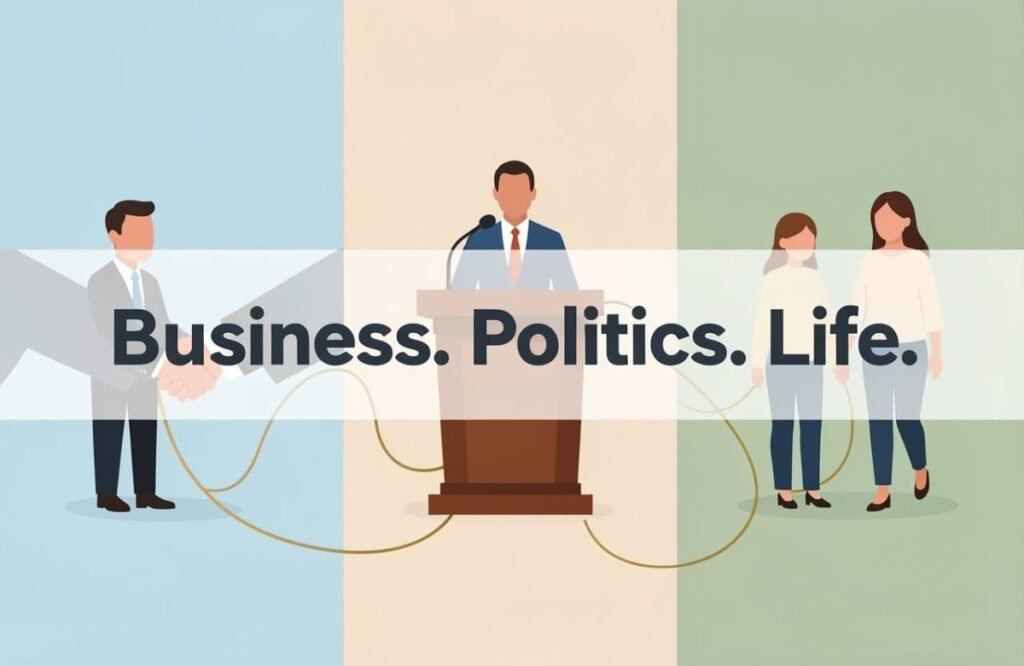
Getting called a legacy usually drops a person into somebody else’s story before they’ve written a single line of their own. Shows up mostly in three arenas: business, politics, and personal life. History sits a little apart, a bigger picture, a longer shadow.
Legacy Meaning in Business
In a boardroom, a legacy can be the founder’s values still shaping decisions long after they’ve retired to a beach somewhere. Or it can be the clunky internal system nobody’s brave enough to rip out.
A company’s legacy might just be its refusal to cut corners on pricing, something loyal customers notice and repeat for decades. Legacy costs, a phrase that exploded after several manufacturing bankruptcies, cover pension and healthcare obligations owed to retirees long after they clocked out for the last time.
Business writers reach for legacy meaning in business to describe brand reputation companies have to guard like a hawk since a damaged reputation is a lot harder to patch than a bad quarterly report. On top of that, there’s the quieter version: a small family shop whose whole identity rests on one grandmother’s original recipe.
Legacy Meaning in Politics
Political legacy usually means how a leader’s time in office gets graded once they’re gone, sometimes years, sometimes decades later.
Historians keep circling back to a president’s legacy’s meaning in politics once new documents surface or long-term fallout finally becomes obvious. One single term can produce a legacy that outlives the term itself by a mile, whether that’s tied to war, civil rights, or some quiet policy nobody noticed at the time.
Rarely neutral, this one. Political legacies get fought over in classrooms, cable news, and family dinners for generations.
Legacy Meaning in Life
Zooming into the personal level, legacy meaning in life usually has zero to do with fame or fortune. It’s about the ripple effect on the people sitting closest to you.
A parent’s legacy might be nothing more than the stubborn work ethic their kid carries into adulthood without even noticing. You don’t need a fortune to leave one behind. Patience counts. So does consistency. Kindness, too, is weirdly underrated.
Legacy Meaning in History
Zoom back out, way out, and legacy meaning in history describes the long-term fallout an entire era or event leaves behind. Can be good. Can be brutal. Sometimes both are tangled together.
The legacy of the Roman Empire is still baked into modern law, architecture, and half the words in this sentence. Colonialism’s legacy keeps shaping economic and political structures across dozens of countries right now, today.
Legacy Meaning in Other Languages
Given how much emotional and legal weight this word carries, it’s worth knowing how it lands in other languages, especially for anyone digging through family history or cross-border estate paperwork.
Legacy Meaning in Farsi
In Farsi, “legacy” most often translates to “miras,” sometimes written “virasat” depending on the region and how formal the conversation gets. Both carry the same split personality as the English version: a literal inheritance of property and a broader, blurrier cultural inheritance passed generation to generation.
Legacy Meaning in Arabic
In Arabic, there’s more than one accepted translation depending on context, including irth, turath, and mirath. Irth and Mirath lean toward the legal and financial side of things. Turath leans cultural, closer to heritage. It’s the same fork in the road English speakers deal with between legacy and inheritance.
Legacy Synonyms and Related Words
Chasing legacy meaning synonyms? The right match depends entirely on which flavor of legacy you’re after.
Financial sense: bequest, inheritance, and endowment.
Reputation sense: heritage, imprint, footprint, mark. Outdated tech sense: obsolete, deprecated, and old.
None of these are perfect stand-ins. Legacy is unusually stretchy, and that stretch is exactly why it survives across so many industries where a narrower word would just fall apart.
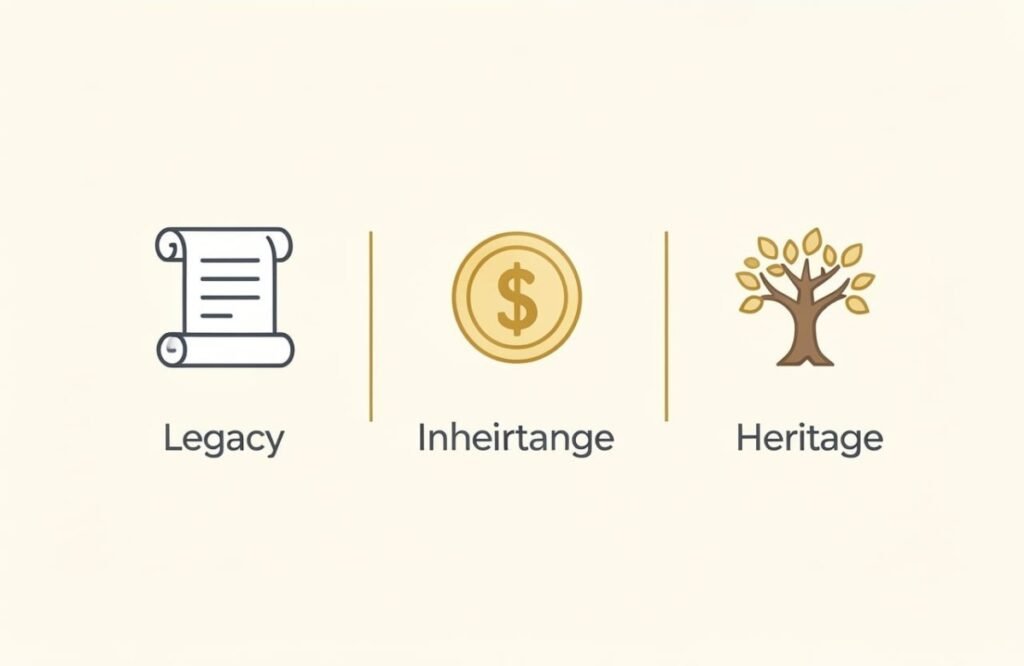
Legacy vs Inheritance vs Heritage
These three overlap constantly, and mixing them up is one of the most common little slip-ups in both casual writing and formal essays alike.
Legacy Core Meaning: Broad, it can be tangible or intangible, personal or collective.
Typical Use: Reputation, systems, impact, money.
Inheritance Core Meaning: Specific, usually physical, and tied to a named person.
Typical Use: Property, cash, and assets spelled out in a will.
Heritage Core Meaning: Shared across a group or culture, rarely individual.
Typical Use: Traditions, history, national or cultural identity.
Quick way to keep it straight. A ring you inherit is your inheritance. Holiday traditions your whole family drags out every December are heritage. The quiet values that shaped who you became without you clocking it? That’s legacy.
How to Build a Personal Legacy
Taking the legacy meaning behind your own life seriously doesn’t need a grand plan. Just a short list of honest habits, repeated.
Figure out what you actually want to be remembered for, not what sounds good carved in stone. Write your values down somewhere real, in plain language, not vague inspirational poster stuff. Teach someone something instead of hoarding it. Get family stories on paper now, before the people who remember them are gone for good. Back something that’ll still matter after you’re not around to check on it. Have the hard conversations with family early. Not later. Early.
Not one of these needs money. Just follow through. That’s it.
CONCLUSION
Bottom line, the legacy meaning shifts depending on where you bump into it, but three threads run underneath every version. First, a legacy moves forward without the person who built it. Second, it can be financial, personal, political, or technological, and context is the only thing that tells you which. Third, building one worth having has surprisingly little to do with money.
If you take just one thing from all this, take this: legacy isn’t really about what you leave behind by accident. It’s about what you build on purpose. Start small today. A habit, a conversation, or one value you actually pass on. Let it grow from there.
FAQ
What does legacy mean in simple terms?
A legacy is something passed down from a person, generation, or era, whether that’s cash, property, values, or plain old lasting impact on other people.
What is an example of a legacy?
A scholarship fund a graduate started, money named in a will, or a plain reputation for fairness. All count.
What does it mean to be a legacy student?
Someone admitted to a school partly because a parent or close relative went there first. That’s the whole deal.
Is legacy always about money?
Not even close. The original legal sense involves money or property, sure, but most modern use points straight at reputation, influence, and personal impact.
What does legacy mean in technology specifically?
Old hardware, old software, old systems, still technically working but badly out of step with current standards or security needs.
How is legacy different from inheritance?
Inheritance is specific, usually physical, spelled out in a will. Legacy is bigger, blurrier, and can mean reputation or influence with no legal document anywhere in sight.
What is the legacy meaning in Farsi and Arabic?
Farsi typically lands on miraz. Arabic offers irth, turath, or mirath, each splitting between financial inheritance and cultural impact.
Why do people care so much about leaving a legacy?
Because it answers something heavier than money ever could. Will this still matter once I’m not here to explain it?