

Somebody just texted you they’re “feening,” and now you’re sitting there like, feening for what, exactly? Fair. Someone just texted you, “I’m feening.” Now you’re wondering, feening for what?
Fair question:
It’s one of those words people use without explaining. You may hear it in a song. You may see it in a comment. Even get a late-night text from a friend who is fiending for pizza.
You’re just expected to know what it means.
The meaning of “feening” is simple once you understand it. But the meaning can change a little based on the person and the situation.
We’ll look at where the word comes from. We’ll explain why people spell it in three different ways. And we’ll explain when they’re talking about something more serious. Should clear up whatever landed you here.
Quick Answer
“Feening” means craving something so badly it’s hard to think about anything else. It comes from “feening,” which comes from the word “fiend,” and people use it both as a joke (feening for tacos) and, in more serious contexts, to describe an actual craving tied to addiction or withdrawal.
Where “Feening” Comes From
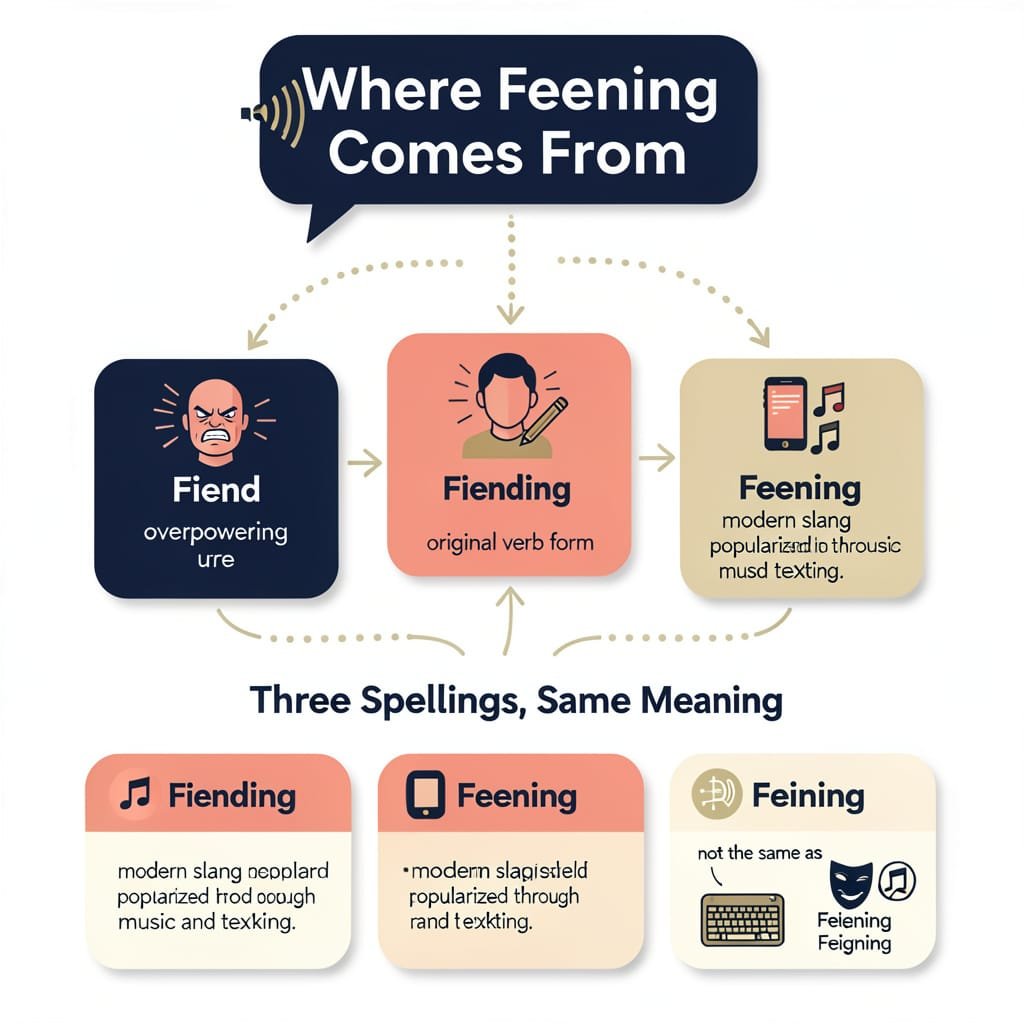
Start with “fiend.” It’s an old word—originally it just meant someone in the grip of a vice, consumed by it. Somewhere along the way, “fiend” got attached to addiction specifically. The verb “fiending” followed to describe the actual act of craving something that badly.
Someone’s music—R&B’s “Feening” is what happens when people stop spelling “fiending” the proper way and start spelling it how it sounds. That shift happened mostly through music—R&B and early hip-hop in the late ’80s and ’90s leaned on the word constantly to talk about wanting someone’s music—R&Bing with that kind of intensity. It’s never really gone away since. Travis Scott’s track “FE!N” gave it another push a few years back and put it back in front of a much younger crowd, which is a big part of why it’s all over texts and captions again now.
Feening vs. Fiending vs. Feining: Which Spelling Is Right?
Honestly, none of them is “correct” in a strict dictionary sense, but here’s how they break down:
- Fiending is the original spelling, the one closest to the actual root word “fiend.”
- “Feening” (sometimes “feenin'”) is the version you’ll see most in music, texting, and social posts.
- “Feining” is basically a typo of “feening” that stuck around because it’s how it sounds when people type fast.
Say all three out loud, and they’re basically identical, and they all mean the same thing. Merriam-Webster’s slang tracking has flagged plenty of craving-related terms like this over the years without ever fully “official-izing” them, which is pretty typical for slang that lives mostly in speech and texting rather than writing.
One mix-up worth clearing up: “feening” is not the same word as “feigning.” “Feigning” means pretending or faking—totally different root, totally different meaning; they just sound alike when you say them fast. Get those two confused in a text, and the whole sentence flips meaning. So it’s worth keeping straight.
How People Use “Feening” in Real Life
The core meaning doesn’t really change — it’s still about craving something intensely — but the vibe shifts depending on where you’re seeing it.
In Texting and DMs
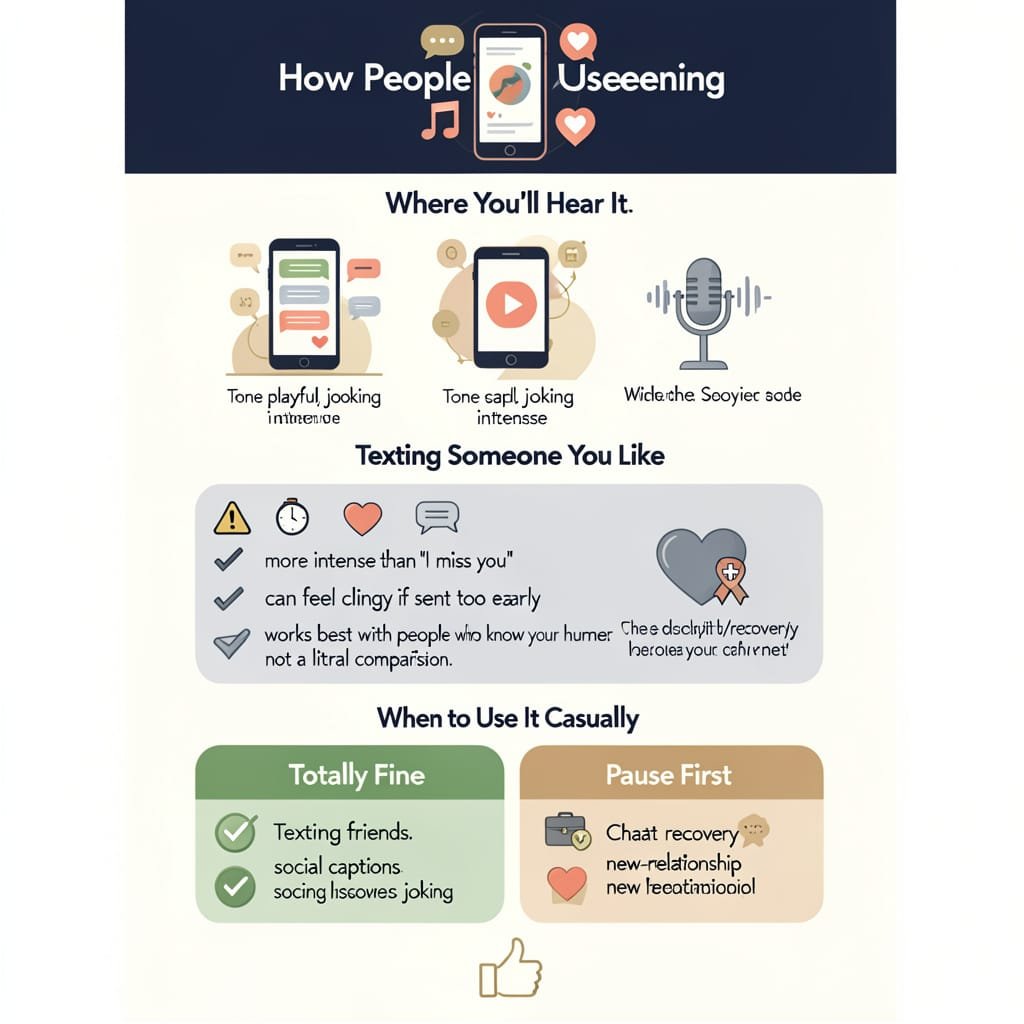
In a text, “feening” usually just means someone wants something (or someone) bad enough that it’s distracting them. It could be as low-stakes as “feening for coffee” or a lot more loaded if it’s aimed at a person. Read the relationship, not just the word.
On TikTok and Social Media
TikTok tends to use it as a bit—captions like “me feening for validation after posting one selfie” are self-aware jokes. Nobody writing that thinks they’ve got an actual problem; the exaggeration is the whole point.
In Music and Pop Culture
Music has mostly kept the word’s original edge. It still gets used to describe wanting someone. Or something with an intensity that borders on desperate, not just casual interest.
What Does It Mean When a Guy or Girl Says They’re “Feening” for You?
Aimed at a person, it’s flirty slang for “I can’t stop thinking about you” or “I really need to see you.” It’s a step up from just saying you like someone—more intense, more playful, and definitely more casual than anything you’d say out loud on a first date.
A couple things to keep in mind before you send it yourself:
- It hits harder than “I miss you,” so it’s a bigger statement than it might feel like.
- Send it too early and it can come off clingy instead of charming.
- It works best with someone who already gets your humor.
- Nobody sending it is actually comparing you to a drug.
If you’re not sure how it’ll land, something like “can’t stop thinking about you” says almost the same thing without the risk.
Fawning and Addiction: The Serious Side of the Word
Because the word traces straight back to “fiend” and “fiending,” it hasn’t fully shaken that history—especially in recovery spaces. It’s still used exactly the way it was originally meant. There, “feening” describes a real craving or withdrawal symptom, something physical and urgent, not just “I really want a snack.”
That’s part of why some people steer clear of using it casually around anyone dealing with addiction, whether it’s their own situation or someone close to them. It’s not a word you need to avoid entirely, but it’s worth a beat of thought before you use it around someone you don’t know well.
Is It Okay to Use “Feening” Casually?
For the vast majority of everyday texting, captions, and jokes with friends, feigning is completely normal, and nobody’s going to blink. It’s everywhere in Gen Z and millennial slang—TikTok, Discord, group chats, and gaming
—almost always with zero connection to substance use intended.
A few spots where it’s worth pausing before you use it:
- Talking to someone in recovery or close to someone who’s struggled with addiction.
- Early texts with someone new, where “intense” can read as “too much, too fast.”
- Anything professional or formal — it just doesn’t fit that register at all.
Outside of those situations, use it the way most people already do — as a slightly over-the-top, mostly funny way to say you really, really want something.
Conclusion
The “feening” meaning has stayed mostly the same over the years. It means wanting something very badly. The word can describe a serious craving linked to addiction or recovery. It can also be used as a joke, like saying you’re “jonesing” for tacos at midnight. You may see different spellings, such as feening, feenin, and feining. The meaning is usually the same. So, the next time you see “feening” in a text or caption, you’ll know what it means. You’ll also know how to use it in the right situation.
FAQ
What does “feening” mean from a guy?
Usually that means he can’t stop thinking about you or really wants to see you—flirty slang, not literal.
Is “feening” a bad word?
Not offensive, no, but it started as addiction slang, so some people avoid tossing it around lightly.
What’s the difference between feening and fiending?
No difference in meaning—fiending’s the original spelling; feening’s the version everyone actually types now.
Where did the word “feening” come from?
From “fiend,” describing someone in the grip of a craving, popularized through hip-hop and R&B lyrics.
Is feening the same as feigning?
No. Feigning means faking something. “Feening” means craving something. They just sound alike.