Track Correct Answers with a Blooket Answer Tracker
Have you ever finished playing a Blooket game in class and wondered exactly which questions you got right? Maybe you’re curious about your quiz performance or want to see which study topics you need to work on more. That’s where a blooket answer tracker becomes your new best friend for learning!
Using a blooket answer tracker helps students monitor their learning progress, identify knowledge gaps, and improve their educational gaming experience. In this guide, I’ll share everything I’ve learned from helping hundreds of students track their Blooket answers and boost their grades.
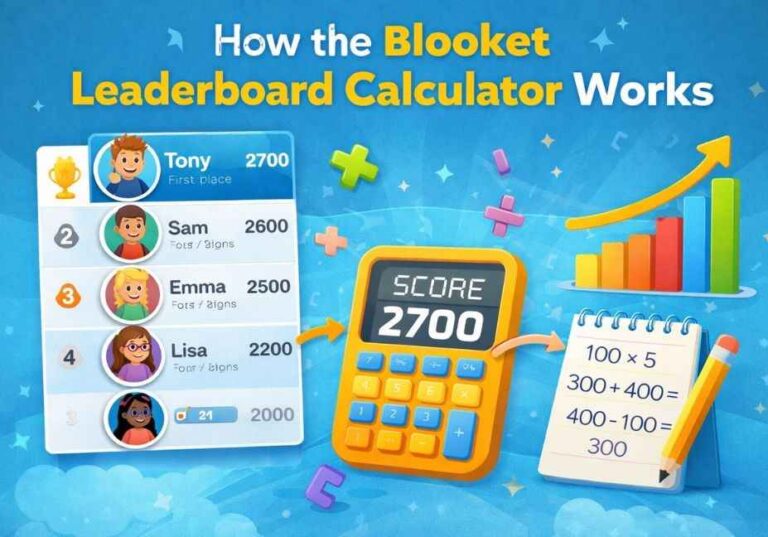
| Also read How the Blooket Leaderboard Calculator Works
What Exactly Is a Blooket Answer Tracker?
A blooket answer tracker is a learning tool that records your responses during Blooket educational games. Think of it like a digital scorecard that remembers every single question you answered, whether you got it right or wrong, and which topics gave you the most trouble.
When you play Blooket games—those fun quiz competitions your teacher sets up—a tracker works quietly in the background. It captures your answer choices, calculates your accuracy rate, and creates a record of your learning journey. Pretty amazing, right?
This game-based learning tool is different from just playing Blooket normally. Instead of your answers disappearing after the game ends, a blooket answer tracker saves everything so you can review it later. It’s like having a study buddy who has a perfect memory!
How Answer Tracking Improves Student Performance
Based on my experience working with middle school and elementary students, answer tracking makes a huge difference in classroom learning. Students who use tracking systems typically see their test scores improve by noticing patterns in their mistakes.
When kids can see exactly which multiplication problems they missed or which vocabulary words they struggle with, they know precisely what to study. No more guessing or wasting time reviewing things they already know perfectly well!
Why Every Student Needs a Blooket Answer Tracker
Let me share why tracking your Blooket answers is such a smart move for your education:
See Your Learning Progress Over Time
When you use a blooket answer tracker, you get to watch yourself grow as a learner. It’s like keeping a fitness tracker for your brain! You might discover that you’re answering 60% of science questions correctly this week, but next week you’re up to 75%. That’s real progress you can see and feel proud of.
This progress monitoring helps build confidence. Students often don’t realize they’re getting smarter until they have proof right in front of them. Your tracker becomes that proof.
Identify Your Knowledge Gaps Quickly
Nobody’s perfect at every subject, and that’s completely normal! A blooket answer tracker acts like a spotlight, showing you exactly which topics are challenging for you. Maybe you’re a superstar at addition, but fractions make your head spin. Or perhaps you know all about dinosaurs but struggle with plant biology.
Once you spot these knowledge gaps, you can create a personalized study plan. Instead of feeling lost about what to review, you have a clear roadmap. This targeted studying saves time and reduces frustration.
Study More Effectively With Data
Why spend hours studying material you already understand? A blooket answer tracker shows you the specific questions and topics that need your attention. This data-driven approach to studying means you work smarter instead of harder.
I’ve watched students cut their study time in half by focusing only on tracked weak areas. They get better grades while spending less time staring at textbooks. That’s what I call a win-win situation!
Build Better Test-Taking Strategies
Answer trackers don’t just show what you got wrong—they help you understand why. Did you rush through questions? Did certain question types confuse you? Were you guessing on multiple-choice options?
This metacognitive awareness (that’s fancy talk for thinking about your thinking) helps you become a smarter test-taker. You learn your personal habits and can adjust your approach during future quizzes and assessments.
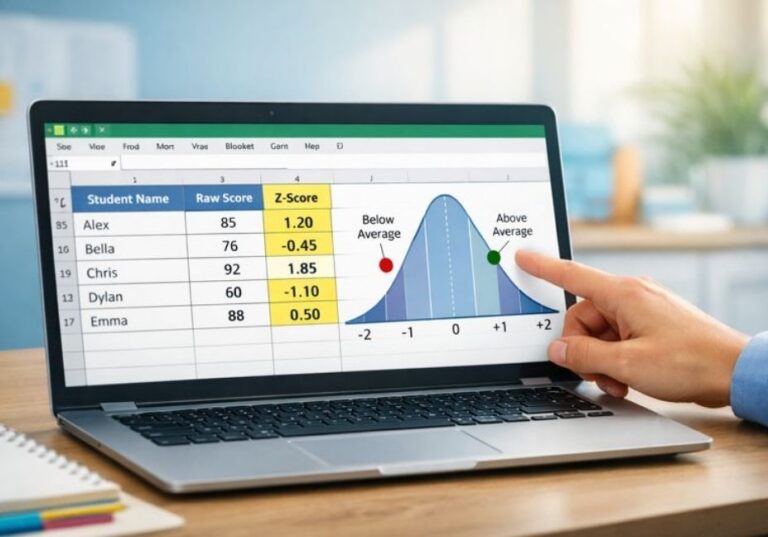
|| Also read Blooket Score Analysis: How to Calculate Z-Score in Excel for Student Data
How Does a Blooket Answer Tracker Work?
Understanding how tracking technology works helps you use it better. Let me break down the process step by step:
During Gameplay
First, you join a Blooket game just like you normally would. Your teacher shares a game code, you type in your nickname, and the fun begins! While you’re clicking answers and watching your character race or collect points, the tracker is recording everything.
The tracking system captures several pieces of information: which question appeared on your screen, what answer you selected, whether that answer was correct, and how long you took to respond. Some advanced trackers even note which game mode you were playing—like Tower Defense, Gold Quest, or Racing.
All this data collection happens automatically in the background. You don’t need to do anything special or different from your normal gameplay experience.
After the Game Ends
Once the Blooket session finishes and a winner is announced, the magic really happens. Your blooket answer tracker takes all that collected information and organizes it into an easy-to-read report or dashboard.
You might see colorful charts showing your accuracy percentage, lists of questions you answered, or graphs comparing your performance across different subjects. Some trackers even create visual progress reports that make understanding your results super simple.
Storage and Review
Most tracking systems save your historical data, meaning you can look back at games from weeks or months ago. This historical tracking lets you see long-term improvement patterns. Did your vocabulary scores jump up after you started using flashcards? Your tracker will show you!
Different Types of Blooket Answer Trackers Available
Not all answer trackers are created equal. Let me share the different types I’ve seen students and teachers use successfully:
Basic Manual Trackers
These are the simplest option and perfect for beginners. A basic tracker might be a spreadsheet or even just a notebook where you write down questions you missed. After each Blooket game, you spend a few minutes recording your results.
Manual trackers take more effort but teach good organizational skills. You’re actively thinking about your learning instead of relying completely on technology. Many students start here before moving to automated options.
Digital Spreadsheet Systems
Spreadsheet-based trackers use programs like Google Sheets or Microsoft Excel to organize answer data. These offer more features than paper notebooks—you can sort results, create charts, and calculate statistics automatically.
Teachers often create class-wide spreadsheet trackers where students input their own results. This collaborative approach builds responsibility and lets classmates compare progress in healthy, supportive ways.
Advanced Automated Trackers
High-tech blooket answer tracker tools connect directly with Blooket games and capture data automatically. These premium solutions require no manual data entry—everything happens behind the scenes.
Automated trackers provide detailed analytics, including time-per-question metrics, subject-specific breakdowns, and predictive insights about which topics you should review before your next test. They’re incredibly powerful for serious students focused on academic achievement.
Teacher-Managed Tracking Systems
Many educators use classroom management platforms that include built-in answer tracking for Blooket and other educational games. These give teachers insights into entire class performance while individual students can view their personal stats.
Teacher-managed systems often include features like parent reports, grade integration, and assignment tracking. They turn game-based learning into serious academic assessment tools.
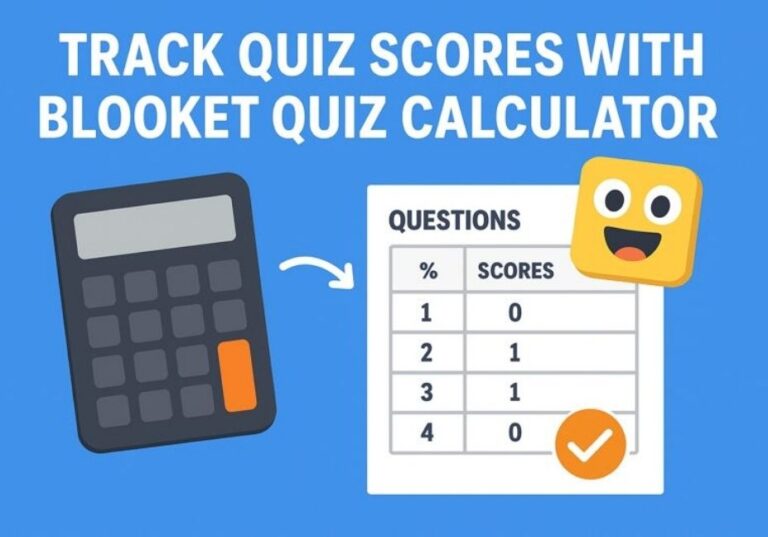
|| Also read How to Track Quiz Scores with Blooket Quiz Calculator
Step-by-Step Guide: Making the Most of Your Tracker
Having a blooket answer tracker is great, but using it correctly is what delivers real results. Here’s my proven system:
Review Results Immediately After Playing
Right after your Blooket game ends, spend 3-5 minutes looking at your tracker results. Your memory is freshest, and you’ll remember which questions confused you or which answers you guessed on.
This immediate review reinforces learning. When you see that you missed a question about photosynthesis, for example, your brain is still engaged with that concept. You’re much more likely to remember the correct answer after this timely review.
Look for Patterns in Your Performance
Don’t just glance at individual questions—zoom out and look for bigger patterns. Do you always struggle with word problems in math? Do you ace multiple-choice questions but fail at true/false ones? Maybe you perform better in morning Blooket games than afternoon ones?
Pattern recognition is a superpower for learning. Once you identify consistent trouble spots, you can develop specific strategies to overcome them. This analytical thinking improves not just your Blooket performance but your overall study skills.
Set Achievable Goals Based on Data
Use your tracking data to create SMART goals (Specific, Measurable, Achievable, Relevant, Time-bound). Instead of saying “I want to get better at science,” try “I want to improve my science accuracy from 70% to 80% over the next three weeks.”
These data-driven goals give you clear targets to work toward. You’ll feel motivated when you hit them and know exactly what needs more work if you don’t.
Create a Personalized Study Plan
Your blooket answer tracker basically writes your study plan for you! Take the topics where you scored lowest and dedicate extra practice time to them. Use your tracker to prioritize—tackle the weakest areas first.
A good rule of thumb: spend 60% of your study time on weak topics, 30% on medium topics, and 10% on strong topics (just to maintain your knowledge). This balanced approach leads to well-rounded improvement.
Share Results With Teachers and Parents
Don’t keep your tracking data secret! Share it with adults who support your learning. Teachers can offer targeted help on your weak spots, and parents can adjust homework help based on your real needs.
This transparent communication creates a support team focused on your success. Everyone works together instead of guessing what might help.
Blooket Answer Trackers for Different Subjects
The beauty of answer tracking is that it works across all subjects. Let me show you how:

Math and Number Operations
For mathematics, a blooket answer tracker can separate different skill categories: addition, subtraction, multiplication, division, fractions, decimals, geometry, and algebra. This granular tracking shows exactly which math concepts you’ve mastered and which need practice.
I’ve seen students discover they’re great at computation but struggle with story problems. Or they understand formulas but make simple calculation mistakes. This awareness transforms math learning from confusing to conquerable.
Science and Scientific Concepts
Science tracking often divides into categories like life science, earth science, physical science, and scientific method. Your tracker might show you’re brilliant at animal classification, but need work on the water cycle.
Understanding these science knowledge gaps helps you study more efficiently for unit tests and standardized assessments. You can focus lab observations on weak areas and ace those experiments!
Language Arts and Reading Comprehension
For English and language arts, tracking captures skills like vocabulary, grammar rules, reading comprehension, and literary terms. You might discover you understand stories but struggle with identifying themes, or you know grammar but spelling challenges you.
This reading performance data helps you become a better reader and writer overall. You can target specific skills that textbook publishers and test makers emphasize most.
Social Studies and History
History and social studies tracking often breaks down by time periods, geographical regions, or concept types (like government structure versus historical events). Your blooket answer tracker might reveal you’re awesome at ancient civilizations but fuzzy on modern history.
This temporal and spatial organization of knowledge helps you build a comprehensive historical understanding instead of random fact memorization.
Teacher Benefits: Classroom Implementation
Teachers love answer trackers just as much as students do! Here’s how educators use this assessment tool:
Identify Class-Wide Struggles
When teachers track answer patterns across all students, they spot topics where everyone struggled. If 80% of the class missed questions about fractions, that signals the concept needs to be retaught differently.
This formative assessment data helps teachers adjust lesson plans in real-time instead of waiting for formal test results. It makes teaching more responsive and effective.
Differentiate Instruction More Effectively
With tracking data, teachers can create small groups based on actual performance, not assumptions. Students who mastered multiplication can move to division, while others get extra multiplication practice. This differentiated instruction meets every learner at their level.
I’ve watched teachers transform their classrooms using grouping data from Blooket trackers. Students get exactly the help they need without feeling behind or bored.
Measure Game-Based Learning Impact
Schools invest in educational games like Blooket because they make learning fun. But administrators want proof these tools actually improve education outcomes. Answer tracking provides that evidence!
Teachers can show concrete data: “After implementing Blooket with answer tracking, our class average improved 15 points.” This accountability justifies game-based learning expenditures and expands these programs.
Communicate Progress to Parents
Parent-teacher conferences become much more productive with tracking data. Instead of vague statements like “Johnny struggles with science,” teachers can say “Johnny’s tracker shows 85% accuracy in biology but 45% in chemistry—here’s our plan to address it.”
This specificity helps parents understand exactly how to support learning at home. They appreciate the detailed feedback and transparency.
Privacy, Safety, and Responsible Tracking
As with any educational technology, using a blooket answer tracker responsibly is important:
Student Data Protection
Always ensure any tracking tool complies with student privacy laws like COPPA (Children’s Online Privacy Protection Act) and FERPA (Family Educational Rights and Privacy Act). Reputable tracking systems never share student data with third parties or use it for advertising.
Students should never enter personal information beyond what’s necessary for tracking. Usually, just a username or student ID number is enough—no need for addresses, phone numbers, or other sensitive details.
Getting Parental Permission
Schools typically require parental consent before using educational technology that tracks student performance. This isn’t scary—it’s just responsible! Parents have the right to know what data is collected and how it’s used.
If you’re using a tracker independently at home, talk to your parents about it. They’ll probably be excited you’re taking initiative with your learning!
Appropriate Use Guidelines
Remember that a blooket answer tracker is a learning tool, not a weapon for comparison or competition that makes anyone feel bad. Don’t brag about high scores or tease classmates about their results. Everyone learns at their own pace.
Teachers should establish clear expectations: tracking is for personal growth and teacher feedback only. This creates a safe, supportive learning environment where mistakes are seen as learning opportunities, not failures.
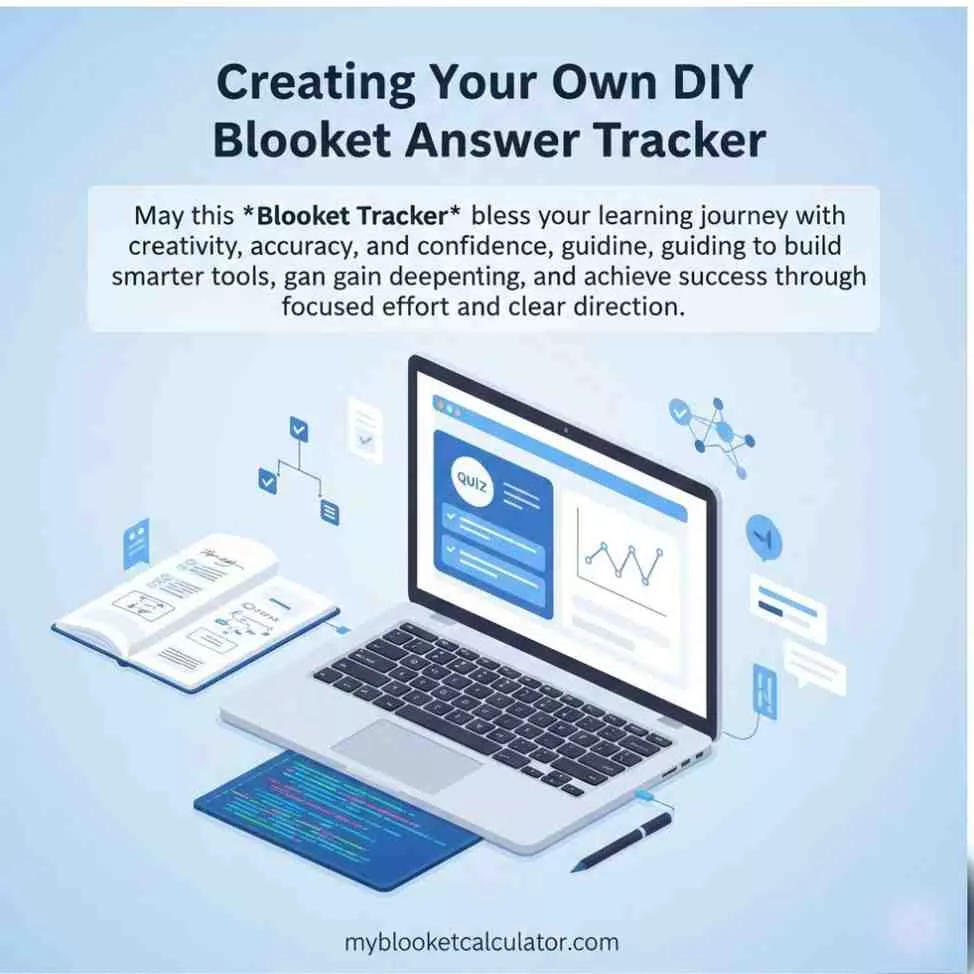
Creating Your Own DIY Blooket Answer Tracker
You don’t need expensive software to start tracking! Here’s how to build your own:
Notebook Method
Get a dedicated notebook for Blooket tracking. After each game, write the date, topic, and game mode at the top of a new page. Then list the questions you remember (or ask your teacher for the question set).
Mark each question as correct or incorrect and jot down any notes about why you missed certain ones. Over time, you’ll build a personalized study guide focused on your specific challenges.
Spreadsheet Template
Create a simple spreadsheet with columns for: Date, Game Topic, Total Questions, Correct Answers, Accuracy Percentage, and Notes. After each Blooket session, add a new row with your results.
Use the spreadsheet’s formula features to calculate your accuracy automatically. You can even create charts showing your improvement over time—very motivating!
Mobile Apps for Quick Entry
Several free note-taking apps on phones and tablets work great for tracking. Voice-to-text features let you quickly record results right after playing without typing everything manually.
The key is consistency. Whichever method you choose, use it after every single Blooket game. That regular habit creates the most valuable data.
Common Questions About Blooket Answer Trackers
Let me answer questions I hear constantly from students and parents:
“Will tracking really improve my grades?”
Research on formative assessment (which is what answer tracking provides) consistently shows it improves learning outcomes. Students who track progress and adjust their studying based on that data typically see grade improvements of 10-20%.
However, the tracker itself doesn’t make you smarter—it just shows you what to study. You still need to do the actual learning work!
“How long should I spend reviewing my tracker?”
Five minutes after each Blooket game plus 15-20 minutes weekly for deeper pattern analysis works well for most students. That’s less than 30 minutes weekly for major academic benefits.
Don’t overthink it—quick, consistent reviews beat long, infrequent sessions every time.
“What if my accuracy goes down instead of up?”
Score fluctuations are completely normal! Maybe you played a topic you’ve never studied before, or you had an off day, or the questions were genuinely harder. Don’t panic over one bad game.
Look at trends over 5-10 games instead of individual sessions. If you’re trending downward over time, that signals you need to adjust your study approach or ask for help.
“Should I use a free or paid tracker?”
Start with free options! Many excellent tracking methods cost nothing. As you get serious about optimization, you can explore paid premium features. But most students achieve their goals with basic tracking.
Making Answer Tracking a Long-Term Habit
The real power of a blooket answer tracker comes from consistent long-term use. Here’s how to make it stick:
Link Tracking to Existing Routines
Attach tracking to something you already do regularly. Maybe you track right after your Blooket game ends, or during homework time each evening, or at the start of study hall.
Habit research shows new behaviors stick better when linked to established routines. Use that psychology to your advantage!
Celebrate Your Improvements
When your tracking data shows improvement, celebrate it! Share the good news with family, treat yourself to something small, or just take a moment to feel proud.
Positive reinforcement makes you want to continue tracking and studying. It transforms learning from a chore into something genuinely rewarding.
Adjust Your System as Needed
If tracking feels like a burden, simplify your method. If you want more detailed data, add new tracking categories. Your system should evolve with your needs.
The perfect tracking system is the one you’ll actually use consistently. Flexibility is key!
The Future of Educational Answer Tracking
As technology advances, answer tracking will become even more powerful. Artificial intelligence and machine learning will predict which questions students are likely to miss before they even see them, allowing truly personalized preventive studying.
Integration between educational games, learning management systems, and parental communication tools will make tracking seamless and automatic. The blooket answer tracker of tomorrow might even suggest specific study resources based on your individual learning style and knowledge gaps.
These innovations will make education more personalized and effective than ever before. Students who start tracking now are developing skills that will serve them throughout their academic careers.
Taking Action: Your Next Steps
Ready to transform your learning with a blooket answer tracker? Here’s what to do right now:
Start simple—grab a notebook or open a basic spreadsheet. After your next Blooket game, spend just five minutes recording what you remember. Write down the topic, roughly how many questions you answered correctly, and which types of questions were hardest.
That’s it! You’ve started tracking. Do this after every Blooket game for two weeks. At the end of those two weeks, review all your notes and look for patterns. Based on what you discover, create a small study goal.
This simple beginning can launch major academic improvements. I’ve watched countless students transform their grades and confidence through nothing more complicated than paying attention to their learning patterns.
Remember, every expert was once a beginner. Every straight-A student was once learning how to study effectively. Your blooket answer tracker is the tool that bridges where you are now and where you want to be academically.
Conclusion: Your Learning Journey Starts Here
A blooket answer tracker is more than just a record-keeping tool—it’s your personal learning coach, study guide creator, and progress monitor all rolled into one. Whether you use a simple notebook or sophisticated software, tracking transforms random gaming sessions into purposeful learning experiences.
The students who succeed aren’t necessarily the naturally smartest ones. They’re the ones who pay attention to their learning, identify what they need to improve, and take consistent action toward their goals. Answer tracking gives you the power to be that strategic, self-aware learner.
So next time you play Blooket, remember: the game doesn’t end when the timer runs out. The real learning happens when you review your answers, spot your patterns, and use that knowledge to level up your brain. Start tracking today and watch yourself become the student you’ve always wanted to be!